
Right bank
Blaye, the right bank
The ramp sits below the ramparts. Step off the ferry and you are already inside a thirty hectare Vauban fortress that is free to enter and open every day of the year.
The citadel stands directly above the ferry ramp. It was built between 1685 and 1689 by the engineer François Ferry under Vauban's direction, and has been on the UNESCO World Heritage list since 2008 as one of the Fortifications of Vauban. Entry is free and the site is open all year.
It is not a monument you visit at a ticket desk. It is a quarter with streets, houses that people live in, workshops and terraces, ringed by 1.5 km of rampartsand more than 30 hectares of fortifications, with a former convent, a prison, barracks and a powder magazine.
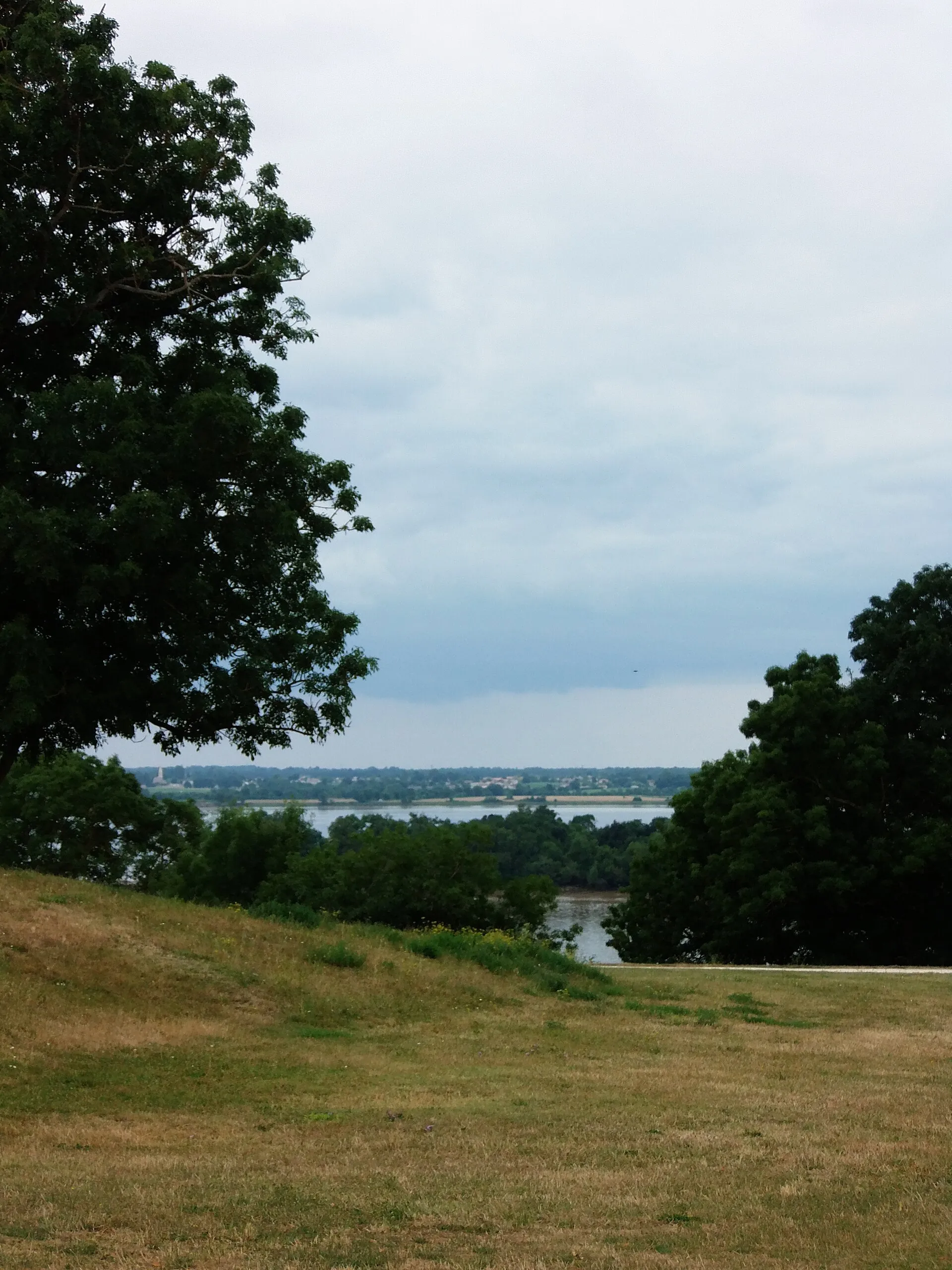
The estuary lock, and why the ferry crosses it
Vauban did not fortify Blaye on its own. He designed a three-point system to close the Gironde to ships heading up to Bordeaux: the citadel on the right bank, Fort Pâté on its island mid-river, and Fort Médoc at Cussac-Fort-Médoc on the left bank. The three covered each other by crossfire, so nothing could pass between them.
That is the line the ferry crosses today. In twenty minutes you pass through the field of fire that sealed the approach to Bordeaux for two centuries, with the citadel behind you and Fort Médoc ahead, a few kilometres from the Lamarque ramp. Few twenty minute crossings read this clearly from the top deck.
Half a day here
- The rampart walk. The path circles the site and looks out over the whole estuary, with Fort Pâté below and the Médoc opposite.
- The tunnels and powder magazines. Open on guided tours, they show the part of the system you cannot see from the surface.
- The town below the gates. A few minutes' walk from the ramp, with the market and the terraces.
- Côtes de Bordeaux wine. The vineyard starts immediately behind the town. This is merlot country, a clear contrast with the cabernet of the Médoc across the water.
Coming without a car
Blaye is one of the few places on the estuary where crossing on foot makes sense. The ramp is at Allées Marines, 33390 Blaye, right below the fortifications, and the foot fare is a fraction of taking a vehicle across. Arrive 15 minutes before departure rather than 30. Fares.
On the other bank
Fort Médoc, the third piece of the lock, is at Cussac-Fort-Médoc beside the Lamarque ramp. If you want to see the complete system in one day, the ferry is the only way to do it without going round through Bordeaux. The left bank, or the full day from Bordeaux.
Questions about Blaye
Is there a charge to enter the citadel?
No. Entry to the citadel is free and the site is open all year. It is a lived-in quarter as much as a monument: you walk in through the gates. Only some guided tours and the museum are paid.
How long do you need in Blaye?
Two hours to walk the ramparts and come down into the town, half a day if you add a guided tour of the tunnels or a tasting. That fits comfortably between two sailings in summer.
Can you come on foot from the ferry?
Yes. The ramp is Allées Marines, at the foot of the fortifications. The town centre and the citadel gates are a few minutes' walk, so crossing on foot works well for half a day.
What is the verrou de l'estuaire?
A three-part defence Vauban designed to close the Gironde to enemy ships: the citadel at Blaye on the right bank, Fort Pâté on its island mid-river, and Fort Médoc on the left bank. All three covered each other by crossfire.
Sources
Updated : September 2026